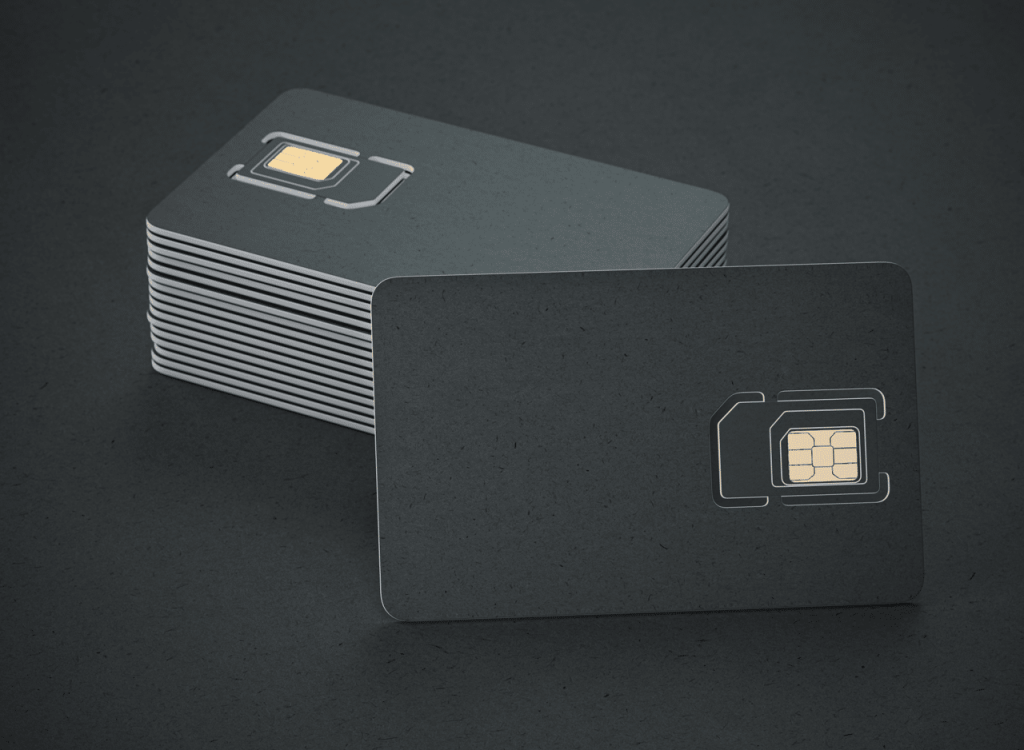
Technologies for modern card and ticket personalization
Magnetic strips, RFID, chip cards, and various printing processes form the backbone of modern card technology. They determine how data is stored, transferred, and secured on cards – whether in payment systems, access control, or identification solutions. Rinas combines these technologies in modular systems for precise, secure, and sustainable card production.
Overview of our technologies
Magstripe
Proven encoding technology for credit, access, and ticket cards.
Card technologies are methods used to encode, store, or visually display information on physical cards. They include magnetic, electronic, and optical systems—from simple magnetic strips to multifunctional smart cards with microchips and contactless RFID communication.
They form the technical basis for payment systems, access solutions, identity management, and automated processes in industry and everyday life.
Typical areas of application
Personalization of payment, customer, and access cards
Ticketing in public transport, ski resorts, and at events
Automated identification in industry and logistics
OEM integration in production lines for cards and tickets
Security applications with data encryption and EMV
Which media and materials are supported?
ID-1 cards (ISO 7810) made of PVC, PET, wood, or metal
Continuous and perforated tickets with magnet, RFID, or chip
Combinations of multiple technologies (e.g., chip + magstripe)
Surface suitable for thermal transfer, DOD, or laser engraving
How does card encoding and personalization work?
Data transfer from database or CSV file
Separation and transport of the card or ticket web
Encoding of the magnetic strip, RFID chip, or smart card microprocessor
Printing variable data, logos, or security features variable data, logos, or security features
Inline verification via read checks and image control
Logging and control of incorrect data records
The integration of multiple technologies in one system enables combined personalization – magnet, RFID, and chip in a single pass.
Card technologies in detail
Magstrip
Consist of three tracks of magnetizable metal oxide. Data is stored as magnetic patterns and detected electromagnetically by a read head.
Advantages: High reliability and easy integration.
Use: Credit cards, access cards, tickets.
Limitation: Lower level of security – increasingly being replaced by chip and RFID technologies.
Data transmission is contactless via radio waves. Passive RFID chips draw energy from the reader’s electromagnetic field, while active chips have their own power source.
LF (125 kHz) for access control, time recording, or animal identification,
HF (13.56 MHz) for ID cards and access,
UHF (868 MHz) for logistics and industry with reading ranges up to 10 m.
Chip cards with EMV technology offer the highest level of protection, followed by RFID with encryption. Magnetic strips are inexpensive but less secure.